Welcome
You’re in the right place to make confident decisions.
Welcome
You’re in the right place to make confident decisions.


If you searched for high-functioning anxiety, chances are you don’t look anxious on the outside.
You get things done.
You stay productive.
People rely on you.
But internally, your mind rarely slows down.
There’s a constant sense of pressure.
A need to stay ahead.
A feeling that if you stop, everything might fall apart.
This article isn’t here to label you or dramatize anxiety.
It’s here to explain what’s actually happening beneath the surface — and why this pattern feels so hard to switch off.
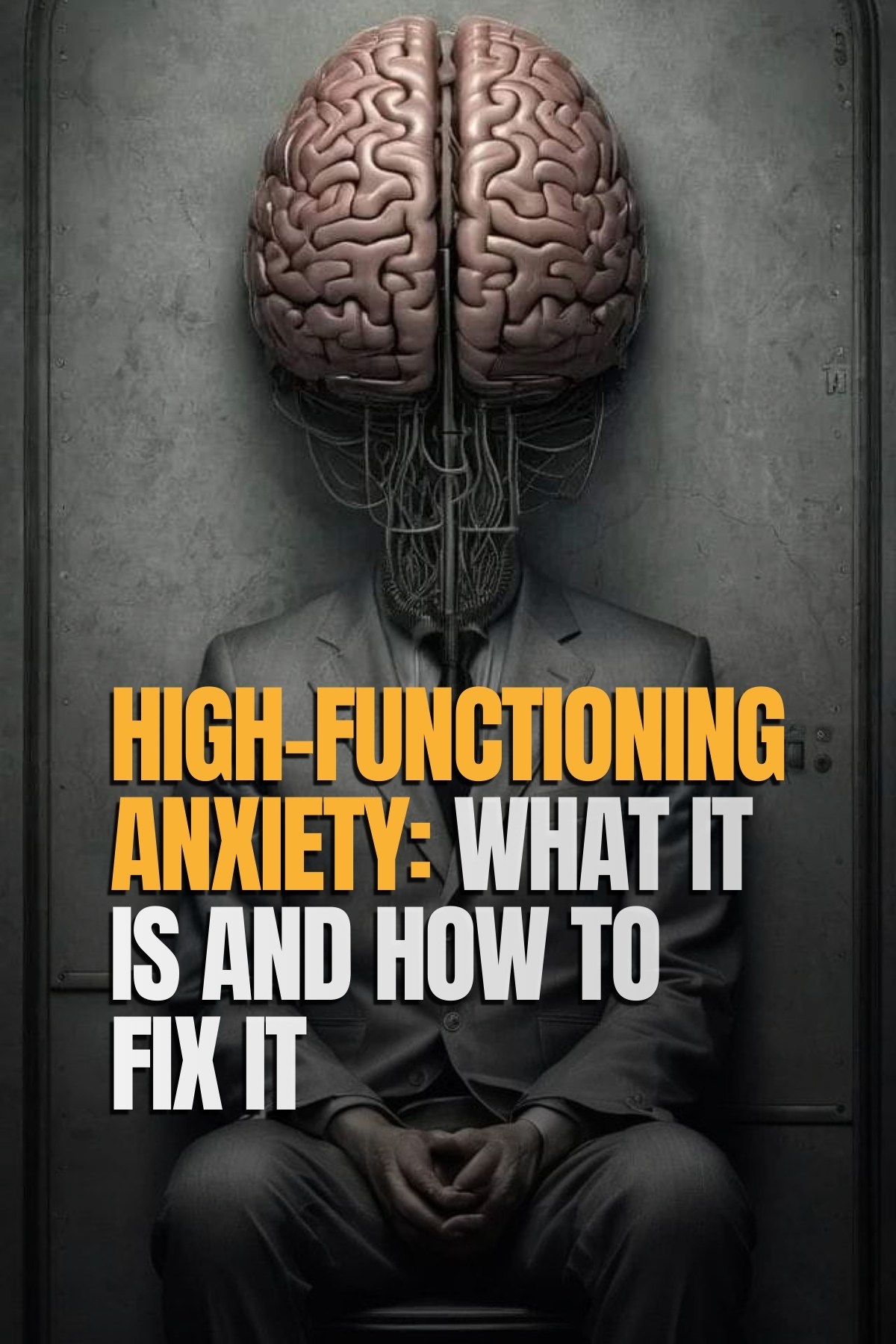
Understand why your mind never slows down — and learn a structured way to regain emotional control without losing your edge.
High-functioning anxiety isn’t the kind that stops your life.
It’s the kind that drives it.
It shows up as:
From the outside, it often looks like ambition or discipline.
From the inside, it feels like never truly resting.
This isn’t a personality flaw.
Over time, your brain learned to associate:
alertness = safety
control = stability
So your nervous system stays slightly activated at all times.
That’s why:
Your system isn’t broken.
It’s simply overtrained for vigilance.
High-functioning anxiety often goes unnoticed — even by the person experiencing it.
But the cost builds quietly:
Because you’re still performing, your mind never gets the signal that it’s safe to stand down.
Here’s the paradox:
When your identity is tied to performance and control,
relaxing feels risky.
Your brain interprets slowing down as:
“If I let go, I’ll lose my edge.”
That’s why common advice like “just relax” or “do less” backfires.
It
The solution isn’t forcing calm.
It’s retraining the nervous system to recognize safety without losing capability.
The turning point for people with high-fun
It’s unde
You don’t need to become a different person.
You need to separate your sense of control from constant tension.
When that separation happens:
Calm stops feeling like weakness — and starts feeling like efficiency.
This kind of anxiety doesn’t resolve through random tips.
It responds best to:
Many people find that following a structured, guided approach helps them integrate these shifts without disrupting their daily life or identity.
High-functioning anxiety isn’t a failure to cope.
It’s a system that learned to survive by staying switched on.
With the right framework, that same mind can learn a new default:
focused, capable — and calm.
Not by giving up control,
but by redefining it.
You’re not trying to slow down your life.
You’re learning how to run it without constant internal pressure.