Welcome
You’re in the right place to make confident decisions.
Welcome
You’re in the right place to make confident decisions.


If you searched how to stop watching pornography,
it means you’re tired of going through the same cycle: you try to stop, you relapse, guilt hits, and you promise it’ll be different next time.
This loop is exhausting—emotionally and mentally.
But it’s not a sign of weakness.
It’s simply a sign that your brain is stuck in a pattern that was never rewritten.
This guide will show you why this happens and how to break the cycle using psychology,
neuroscience, and emotional reconditioning—without relying only on “willpower”.
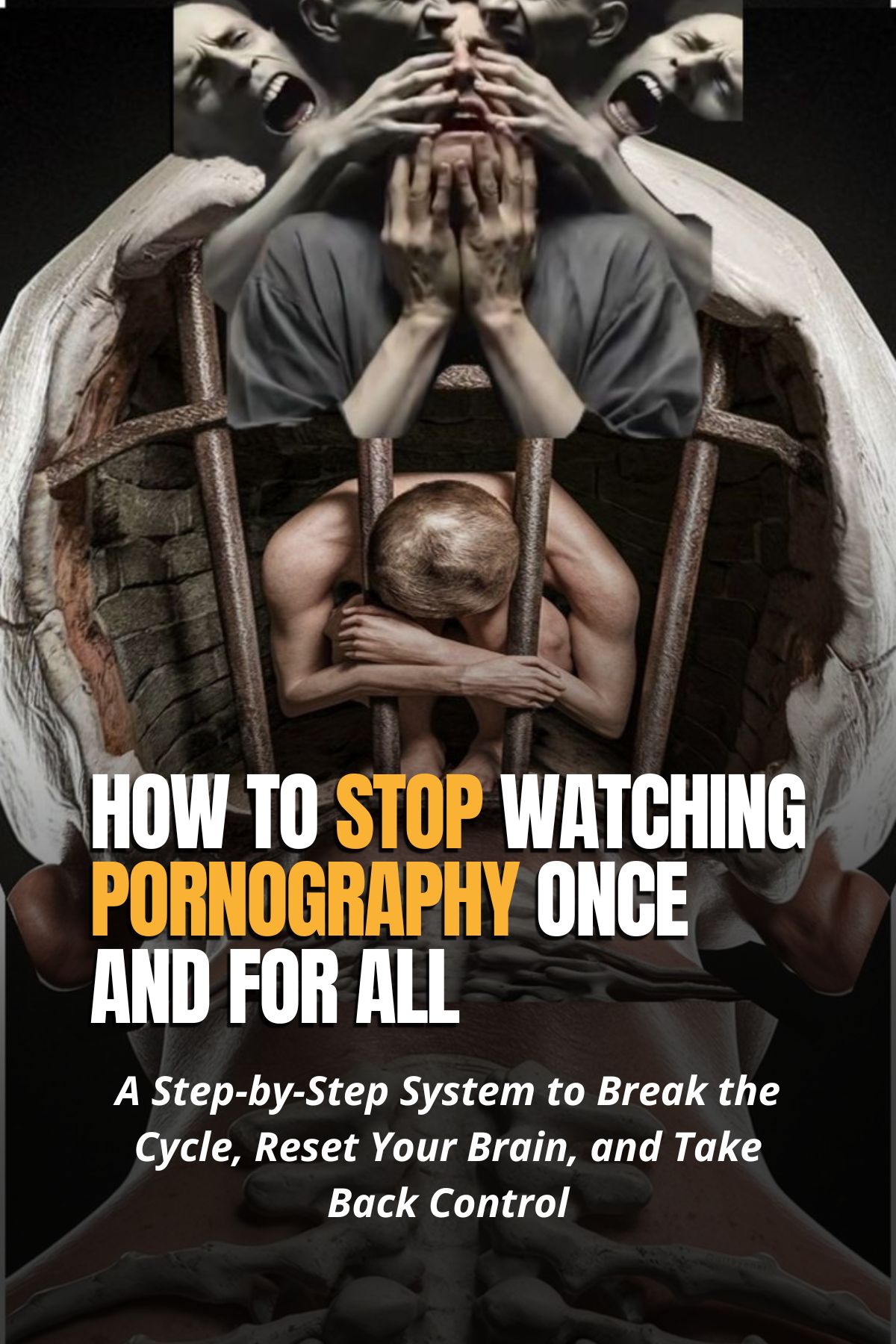
Understand the real cause of the habit, retrain your brain, and finally feel in control again — without shame, fear, or confusion.
Most people think they can’t stop watching pornography because they lack discipline.
In reality, your brain learned to use porn as a fast emotional regulator.
Whenever you feel:
…your brain takes the quickest route to relief: instant dopamine.
So when you search how to stop watching pornography,
the real challenge isn’t fighting the urge — it’s training your brain to choose a different path for emotional relief.
The urge doesn’t start when you notice it.
It starts much earlier.
There are invisible steps you never see:
Most relapses actually happen at step 3, not at step 5.
That’s why learning how to stop watching pornography requires spotting the start of the cycle — not just fighting the peak of the impulse.
Porn becomes an emotional loop for three main reasons:
It’s fast, predictable, and always available.
It creates emotional dependence, not just visual attraction.
Each time you watch, the brain reinforces the route:
tension → relief → repeat.
After pleasure comes guilt.
Guilt creates more tension.
And tension pushes you back to the same habit.
This loop traps people even when they desperately want to stop.
Stopping porn isn’t about fighting urges.
It’s about changing the emotional route that leads to them.
The core steps are:
Once this happens, the habit loses power naturally — without constant struggle.
You’re not sabotaging yourself.
Your brain is simply trying to protect you from uncomfortable emotions using the fastest method it knows.
Over time, it labeled pornography as a shortcut for relief.
This shortcut feels impossible to turn off — until you train a new path.
The good news?
The brain loves efficiency.
When it learns a better route, the old response fades.
That’s why people who discover how to stop watching pornography using psychological reconditioning say it feels like the urge finally “switches off.”
Here’s a simple but extremely effective framework that helps anyone searching how to stop watching pornography to break the cycle for good:
Notice the emotional rise, not the urge itself.
The cycle always begins with tension, never with desire.
When you detect those first signs, you regain control early.
Separate your identity from the impulse:
“This urge is happening inside me, but it isn’t me.”
This reduces around 70% of the craving’s intensity because you stop personalizing the habit.
Each time the urge appears, run a quick replacement action:
These micro-actions break the neural loop and build a new pathway.
With repetition, your brain rewrites the response, replacing porn with healthier emotional regulation.
That’s how you stop watching pornography consistently — not by force, but by reconditioning.
If you made it to the end of this guide, that already shows something important: you’re not trying to figure out how to stop watching pornography through sheer force. You’re choosing awareness, clarity,
and strategy — and that’s what separates real change from temporary effort.
Overcoming this habit isn’t about perfection.
It’s about consistency, emotional awareness, and small wins that slowly retrain your brain.
The truth is simple:
you’re not fighting against yourself — you’re teaching your mind a new way to respond.
Every time you catch a trigger earlier, interrupt the automatic pattern, or choose a healthier action, you weaken the old cycle and build a stronger one in its place.
That’s how long-term transformation actually happens: gradually, steadily, and with self-understanding.
So keep going.
Even on the hard days.
Every step counts, and you’re already further ahead than you think.
This journey isn’t only about stopping a habit.
It’s about reclaiming clarity, emotional balance, and the ability to lead your life with intention again.
You’re on the right path — keep moving forward.